
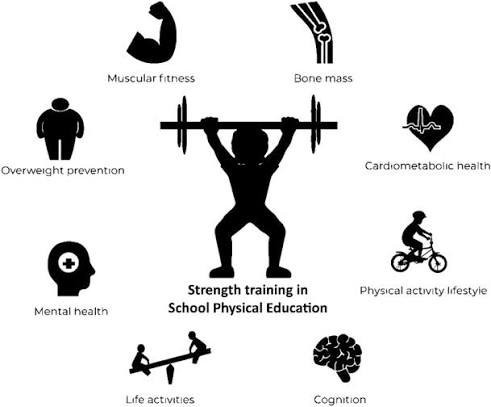
Strength training is a form of exercise in which your muscles work against resistance to become stronger, more resilient, and better able to perform everyday activities.
The resistance can come from:
- Body weight — squats, lunges, push-ups
- Resistance bands
- Dumbbells or weights
- Machines
- Cables
- Other forms of external resistance
Strength training isn’t only about building large muscles. It is about improving the capacity and function of your muscles, bones, joints, and nervous system.
As we age, muscle mass and strength naturally tend to decline. Regular strength training helps counter this process and supports overall physical health.
1. Builds and maintains muscle strength
Stronger muscles make everyday movements—walking, climbing stairs, lifting objects, and getting up from a chair—easier.
2. Supports healthy bones
Resistance exercise places appropriate mechanical stress on bones, which can help maintain bone strength and density.
3. Improves insulin sensitivity
Muscles are major users of glucose. Regular resistance exercise can improve the body’s ability to use insulin and help muscles take up glucose more effectively.
4. Helps with blood-sugar regulation
Because active muscles use glucose for energy, strength training can contribute to better blood-glucose management, particularly when combined with an overall healthy lifestyle.
5. Protects joints and improves movement
Stronger muscles can provide better support around joints and help improve movement patterns. Combined with mobility and flexibility work, this can contribute to better physical function.
6. Improves posture and balance
Strengthening the muscles of the core, back, hips and legs can support posture, stability and balance.
7. Helps maintain independence as we age
Strength is closely connected to functional ability. Maintaining it can make everyday tasks easier and help people remain physically independent.
8. Supports healthy body composition
Strength training helps maintain or increase lean muscle mass and can complement nutrition and aerobic exercise when the goal is managing body composition.
One Comment
[…] Diabetes management is often associated with diet, medication, walking, and cardiovascular exercise. But there is another important component that deserves greater attention: strength training. […]